
Are your fuel bills climbing while your team’s efficiency stays flat? Juggling employee locations, guessing ETAs for frustrated customers, and watching costs spiral can feel like an impossible task for any small business owner. But what if you could fix it all, simply and affordably? This is where modern small business vehicle tracking changes the game. Forget the intimidating, expensive systems built for massive corporations. Today’s solutions are fast, user-friendly, and designed to deliver real results from day one-giving you total visibility without the headache.
This straightforward guide cuts through the noise. We’ll show you exactly how to choose the right system to gain real-time control over your fleet, slash operational costs, and boost team accountability. Get ready to find an easy-to-use solution that saves you time and money, so you can focus on what you do best: growing your business.
Key Takeaways
- Understand the critical difference between hardware and app-based trackers to choose the right fit for your budget and operational needs.
- Go beyond simple location data. Discover how tracking directly slashes fuel costs, streamlines job scheduling, and improves customer response times.
- Implementing a small business vehicle tracking system is easier than you think. Focus on the essential features that deliver maximum impact without the complexity.
- Get your system up and running fast. Follow a simple 3-step plan to start boosting your fleet’s efficiency in no time.
What is Vehicle Tracking & Why Your Small Business Needs It
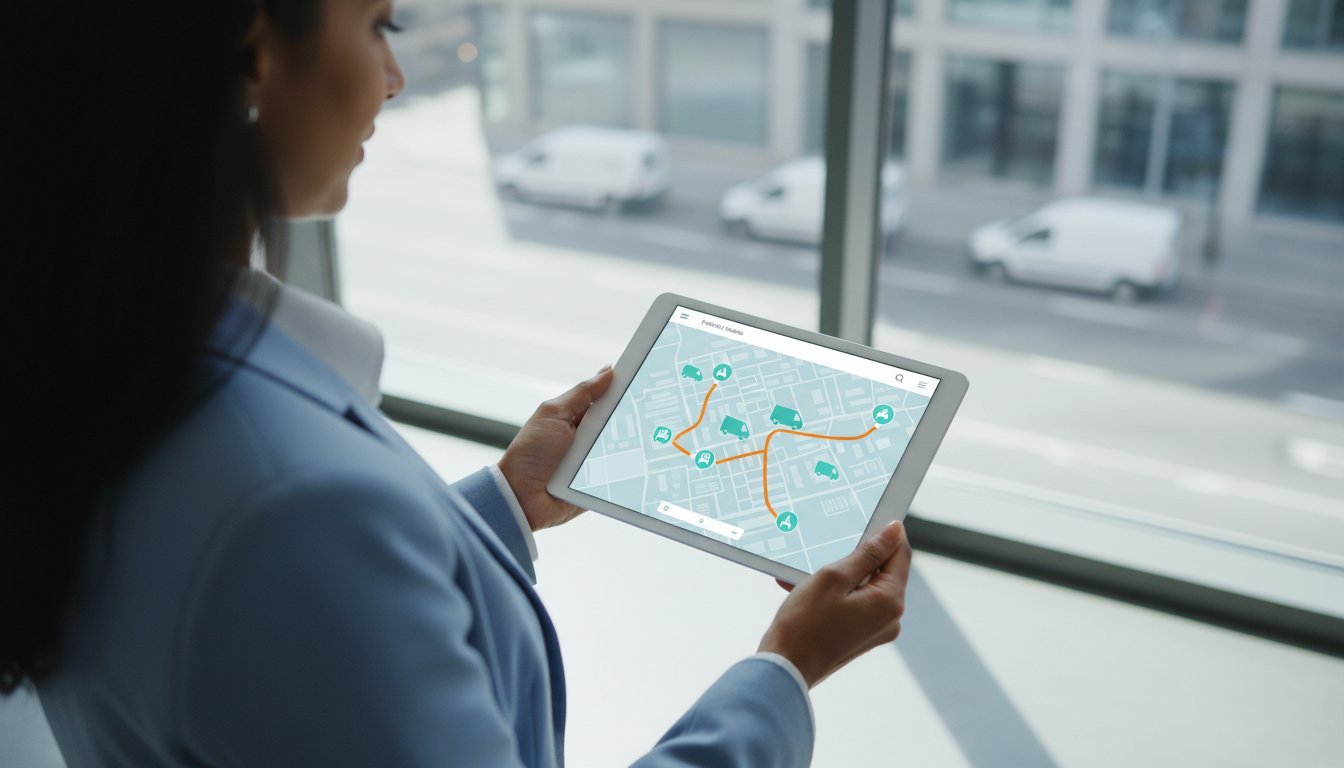
At its core, vehicle tracking is simple: it’s technology that shows you where your company vehicles are in real-time. Think of it as a live map of your entire mobile operation. This technology, often called a Vehicle Tracking System, combines GPS with software to give you instant location data. It’s a common misconception that this is only for huge corporations with massive fleets.
The reality is that modern small business vehicle tracking is more accessible and affordable than ever. It’s about swapping guesswork for hard data to boost efficiency, slash operational costs, and deliver five-star customer service. You move from managing chaos to optimizing performance.
The Core Problem: Lack of Visibility
Without real-time visibility, you’re operating in the dark. Every day is filled with frustrating inefficiencies that slowly chip away at your profits and reputation. You’re stuck in a reactive loop, dealing with problems instead of preventing them. Common pain points include:
- Wasting precious time calling drivers just to get a location update.
- Accidentally sending the farthest technician to an urgent new job.
- Wondering if a company van is being used for unauthorized side jobs after hours.
- Struggling to prove arrival times or job duration when a client disputes an invoice.
The Simple Solution: Real-Time Insight
Vehicle tracking replaces these blind spots with clarity and control. It’s a single source of truth for your mobile team, empowering you to make smarter, faster decisions that directly impact your bottom line. Instead of guessing, you know. This instant insight translates into a stronger, more profitable business.
- See your entire team on one map. Instantly know who is closest to the next job.
- Cut fuel and labor costs. Optimize routes and eliminate unnecessary mileage and overtime.
- Provide professional ETAs. Give customers accurate arrival times they can count on.
- Create an automatic digital record. Effortlessly verify routes, stops, and time spent on-site.
Hardware vs. App-Based Tracking: Which is Right for You?
When it comes to small business vehicle tracking, not all systems are created equal. The biggest choice you’ll make is between dedicated hardware plugged into your vehicles and a modern app-based system that uses your team’s smartphones. Your decision boils down to three key factors: simplicity, cost, and how quickly you need to get started.
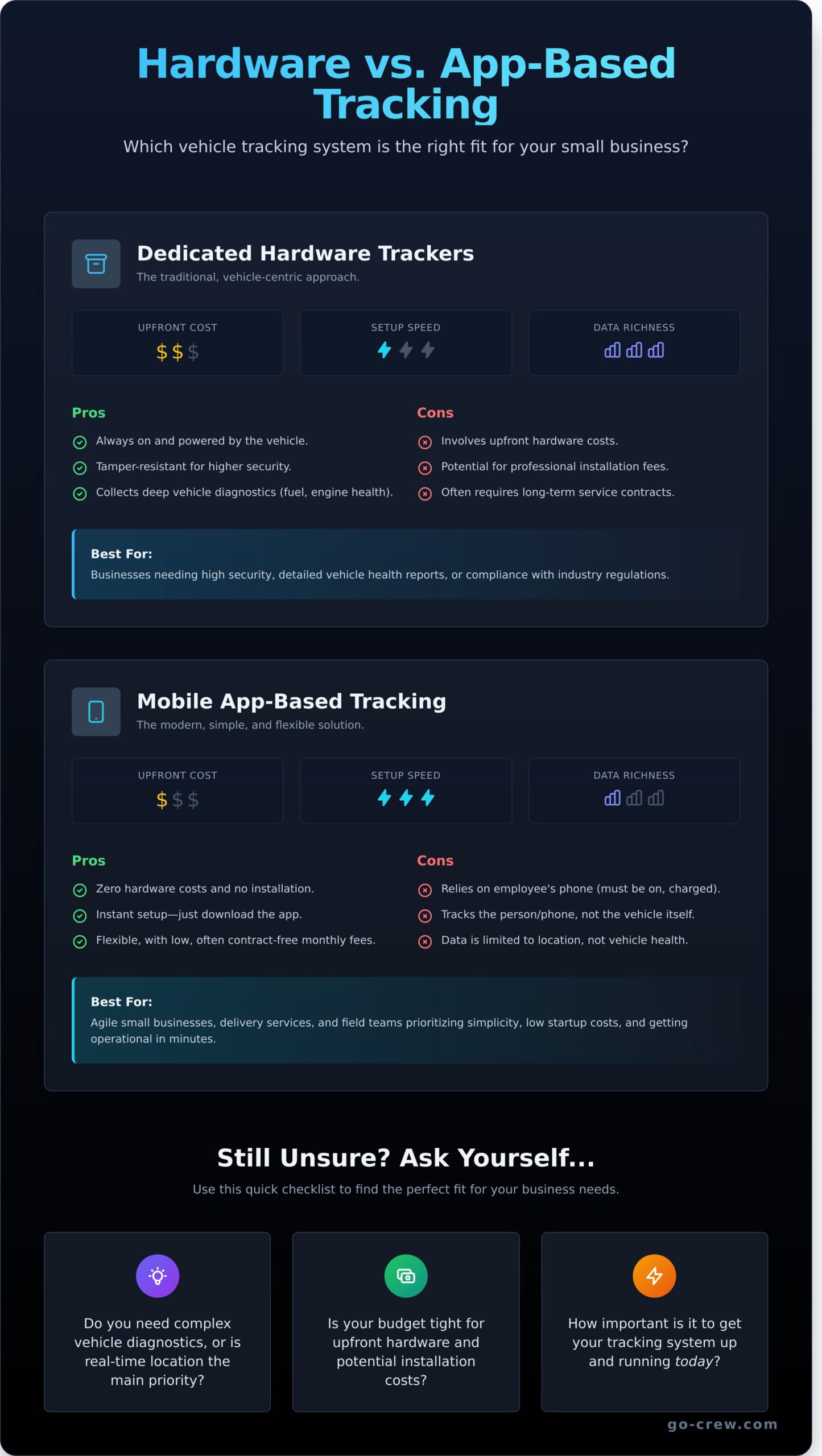
Dedicated Hardware Trackers (The Traditional Way)
These are small GPS devices, often called telematics boxes, that are physically installed in each vehicle. Most plug directly into the OBD-II port, while others are hardwired for a more permanent fit. These devices are the backbone of traditional fleet management technology, collecting everything from location to engine fault codes.
- Pros: Always on and powered by the vehicle, tamper-resistant, and capable of collecting deep vehicle diagnostic data like fuel consumption and engine health.
- Cons: Involves upfront hardware costs, potential professional installation fees, and often requires long-term service contracts.
- Best For: Businesses that need high-level security, detailed vehicle health reports, or compliance with specific industry regulations.
Mobile App-Based Tracking (The Modern, Simple Way)
This approach ditches the extra hardware and leverages the powerful GPS technology already built into your team’s smartphones. A simple app runs in the background to share location data in real-time. This method is all about speed and efficiency, removing the typical barriers to getting started with vehicle tracking.
- Pros: Zero hardware costs, instant setup (just download the app), extreme flexibility, and typically lower, contract-free monthly fees.
- Cons: Relies on the employee’s phone being turned on, charged, and having the app running. It tracks the person/phone, not the vehicle itself.
- Best For: Agile small businesses, delivery services, and field teams that prioritize simplicity, low startup costs, and getting operational in minutes.
Making the Choice: A Quick Checklist
Still unsure? Ask yourself these simple questions to find the right fit for your business:
- Do you need complex vehicle diagnostics, or is real-time location the priority?
- Is your budget tight for upfront hardware and installation costs?
- How important is it to get your tracking system running today?
If speed and simplicity are your main goals, the choice is clear. Discover how an app-based system can get you started in minutes.
Top 5 Benefits of Vehicle Tracking for Small Fleets
Think vehicle tracking is just about seeing dots on a map? Think again. For a growing business, it’s a command center for your entire mobile operation. Effective small business vehicle tracking is about turning real-time data into dollars saved and customers earned. It’s an investment that doesn’t just pay for itself-it actively boosts your bottom line by solving the daily challenges you face.
1. Slash Fuel and Maintenance Costs
Fuel and upkeep are two of the biggest drains on your budget. A tracking system attacks these costs directly. It finds the most efficient routes for your landscaping crew, cutting down on wasted mileage and fuel. You can also eliminate hidden expenses by:
- Monitoring Idling: Get alerts when a delivery van is left running for too long, burning fuel for no reason.
- Stopping Unauthorized Use: Geofencing notifies you if a company vehicle is used for personal errands after hours, reducing wear and tear.
2. Boost Team Productivity and Accountability
More jobs completed per day means more revenue. Vehicle tracking gives you the operational overview to make that happen. Instead of guessing, you can instantly dispatch the closest HVAC technician to an emergency call, saving critical travel time. At its core, a modern vehicle tracking system provides the data to verify timesheets against job site arrivals and departures, ensuring accurate billing and building a culture of accountability.
3. Elevate Your Customer Service
In a competitive market, customer experience is everything. Stop giving vague arrival windows. With real-time location data, you can provide customers with accurate ETAs, just like the major delivery companies. This professionalism builds trust and sets you apart. If a client ever disputes a service call, you have a digital record to confirm arrival times and duration, resolving issues in seconds.
4. Improve Driver Safety and Behavior
Your drivers are the face of your company. Promoting safe driving protects your team, your assets, and your reputation. A GPS tracking system allows you to monitor unsafe habits like speeding, harsh braking, or rapid acceleration. Coaching your team based on this data helps reduce accident risk, minimize vehicle damage, and can even lead to lower insurance premiums.
5. Enhance Vehicle Security and Recovery
Your vehicles are among your most valuable assets. Get peace of mind with instant alerts for unauthorized movement. If a truck is moved from a job site after hours or towed without permission, you’ll know immediately. In the unfortunate event of a theft, GPS tracking gives law enforcement the exact location data needed for a fast and successful recovery.
Essential Features Your Tracking Solution Must Have
When you’re shopping for a small business vehicle tracking solution, it’s easy to get lost in a sea of features designed for massive corporate fleets. Don’t get overwhelmed. The best systems prioritize simplicity and deliver immediate value. Focus on the core functions that save you time and money, and ensure your chosen tool is fast and accessible on both desktop and mobile devices.
Forget the enterprise-level complexity. Your goal is efficiency, not a new full-time job managing software. Here are the three non-negotiable features you should look for.
Real-Time Map View: Your Command Center
This is the absolute cornerstone of any tracking system. At its heart, you need a live map that shows you exactly where everyone is, right now. No delays, no complex menus. A great map view is your operational command center, giving you the critical information you need at a glance.
- Live Locations: See every vehicle’s current position on a single, easy-to-read map.
- Status at a Glance: Instantly check vehicle speed, travel direction, and if they are stopped or moving.
- Speed and Clarity: The map must load quickly and be clear on both large desktop screens and small mobile phones.
Location and Trip History: Your Digital Logbook
Seeing where your team is now is crucial, but seeing where they’ve been is just as important. A solid trip history feature acts as an automatic digital logbook. Use it to verify job completion, review past routes for future optimization, or quickly settle billing questions with a clear, timestamped record of travel. Always check how long the provider stores this data-30 to 90 days is a good standard for most small businesses.
Simple Group Management: Keep Your Team Coordinated
You don’t need a complex HR platform to manage your drivers. Your tracking tool should make team management effortless. Look for the ability to create logical groups or ‘crews’ for different jobs or teams. Onboarding a new driver should be as simple as sending an invitation link, not a multi-step IT project. This focus on simplicity is what sets a great tool apart.
This is where a modern platform shines-it gets out of your way so you can get work done. See how easy it is to create your crew with Go Crew.
How to Get Started with Vehicle Tracking in 3 Simple Steps
Implementing a small business vehicle tracking system doesn’t have to be a major project. Forget complex installations and lengthy training sessions. With a clear, actionable plan, you can get your team up and running quickly, often in a single afternoon. The key is open communication. Frame the change around the benefits for everyone: improved driver safety, more efficient routes, and fewer “where are you?” phone calls interrupting the workday.
Follow this simple, three-step process to get started without the hassle.
Step 1: Define Your Main Goal
Before you look at any software, pinpoint the #1 problem you need to solve. What is your primary driver for this change? Answering this question clarifies everything and helps you focus on the features that truly matter. Ask yourself if your main goal is:
- Cost Reduction: Are you trying to cut fuel waste by monitoring idle time and optimizing routes?
- Productivity Boost: Do you need to dispatch the nearest driver and fit more jobs into the day?
- Better Customer Service: Is providing clients with accurate, real-time ETAs your top priority?
Your core objective will guide you to the right type of solution, ensuring you don’t pay for features you don’t need.
Step 2: Choose a Simple, Scalable Solution
You don’t need a long-term contract or expensive hardware to begin. Look for a modern, app-based system that offers zero hardware hassle-your team can simply use their existing smartphones. This approach is perfect for agility and keeping initial costs low. Start with a free trial or a flexible plan to test the platform; for a comprehensive option, you can check out TrackMyBusiness. Crucially, ensure any solution can grow with you, easily accommodating more team members and vehicles as your business expands.
Step 3: Onboard Your Team and Go Live
Your team’s buy-in is essential for success. Explain how this new tool makes their job easier, not harder. Focus on the direct benefits for them, such as accurate mileage logging for expenses, route assistance, and far fewer check-in calls. The rollout can be as simple as sending an invitation link. Help everyone install the app and join your company’s private group. You can start tracking and collecting valuable operational insights from day one, turning real-time data into smarter business decisions immediately.
Ready to see how simple it can be? Explore a user-friendly, app-based solution designed for teams on the move. Get started with Go Crew today.
Drive Your Business Forward with Smarter Tracking
The takeaway is clear: vehicle tracking is no longer a luxury, but an essential tool for any small business on the move. It’s the key to transforming your operations, cutting fuel costs, and improving driver accountability. Modern solutions prove that effective small business vehicle tracking doesn’t require complicated hardware or a lengthy setup. The power to boost your fleet’s efficiency is already in your pocket.
Ready to stop guessing and start knowing where your team is in real-time? Join the thousands of crews worldwide who trust Go-Crew. It’s the simple, powerful solution designed for time-saving and efficiency. With no hardware required, you can get your entire team set up and tracking in just a few minutes.
The road to a more profitable and streamlined business is just a click away. Start Tracking Your Business Vehicles for Free Today!
Frequently Asked Questions About Small Business Vehicle Tracking
Is it legal to track my employees’ vehicles?
Yes, in most regions, it is legal to track company-owned vehicles for business purposes during work hours. The key is transparency. You should have a clear, written policy and inform your team that tracking is active for reasons like safety, dispatching, and efficiency. Always consult your local laws to ensure full compliance, as specific regulations can vary by state or country.
Will a vehicle tracking app drain my employees’ phone batteries?
Modern apps are built for efficiency. They use smart location technology that minimizes battery drain, often only updating when the vehicle is moving. While any app running in the background uses some power, the impact from a quality tracking app is minimal and designed to last a full workday without issue. It’s a massive improvement over older, power-hungry technologies.
How much does small business vehicle tracking cost?
The cost of small business vehicle tracking is more affordable than ever, especially with app-based solutions. Plans typically range from $15 to $45 per vehicle per month. This subscription model usually includes all features without requiring upfront hardware costs or long-term contracts. It’s a simple, scalable investment that pays for itself through fuel savings and improved productivity.
Do I need to buy any special hardware or equipment?
Not necessarily. The easiest way to start is with a mobile app that your team can install on their existing smartphones. This requires zero hardware installation. For more advanced features like engine diagnostics, you can use a small plug-in OBD-II device. But for most small businesses, a powerful mobile app provides all the real-time location data you need to get going instantly.
How accurate is GPS tracking on a mobile phone?
GPS tracking on modern smartphones is incredibly accurate, typically pinpointing a vehicle’s location within 5 to 10 meters (about 16-33 feet). This level of precision is perfect for confirming job site arrivals, optimizing routes, and providing customers with accurate ETAs. While dense urban areas can occasionally affect signal, the technology is highly reliable for day-to-day business operations.
Can I track vehicles outside of work hours?
No, and you shouldn’t. Tracking should be strictly limited to work hours to respect employee privacy and comply with labor laws. A good tracking system allows you to set schedules where tracking automatically deactivates after business hours. This builds trust with your team and ensures you are only collecting data that is relevant to business operations, protecting both you and your employees.
