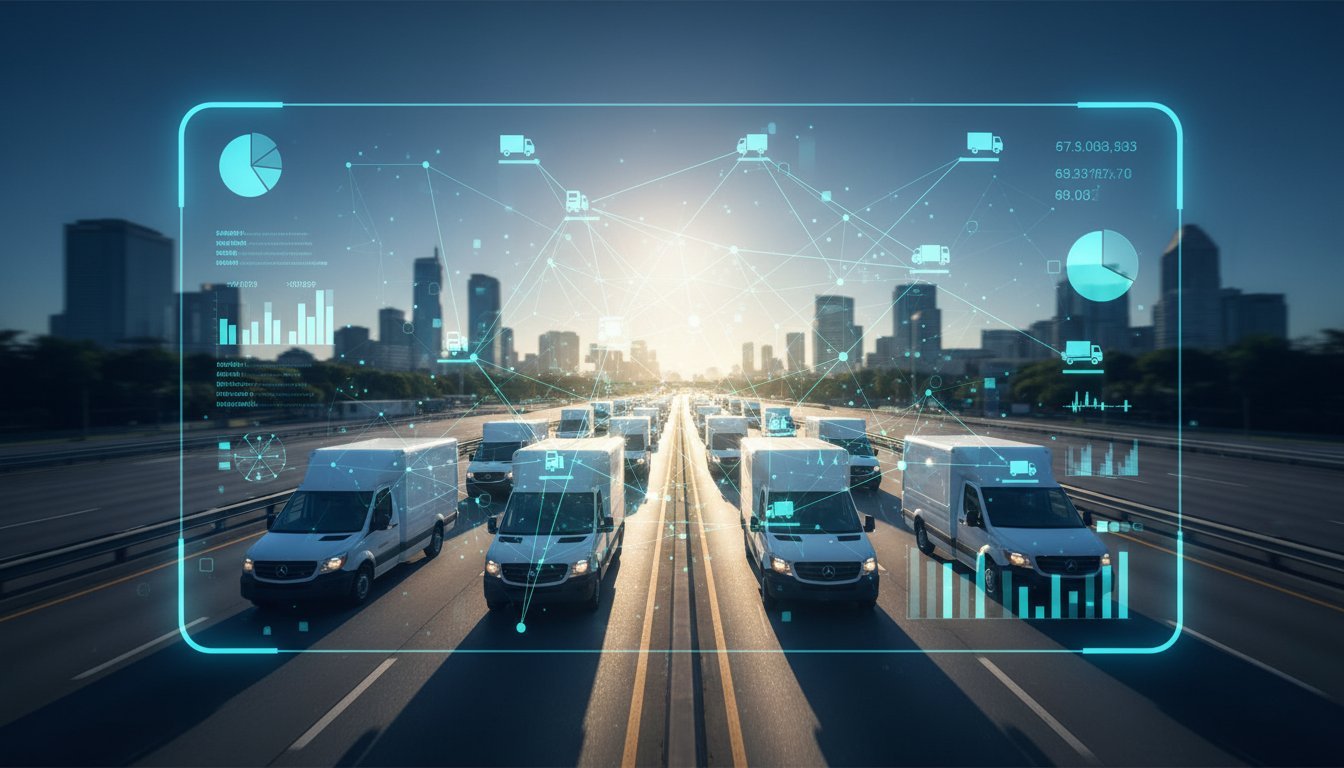

Fuel costs soaring? Team wasting precious time on inefficient routes? That frustrating feeling of not knowing where your vehicles are in real-time? If this sounds familiar, you’re not just imagining it-it’s the daily headache for countless businesses on the move.
But what if you could take back control, streamline your entire operation, and boost your bottom line with one smart move? This is where modern fleet management solutions come in. And forget the clunky, expensive systems you might be picturing. The game has changed, and the power to optimize is now simpler and more accessible than ever.
This guide is your fast track. We’ll cut through the noise to show you exactly how these tools work and how to choose the right one for your needs-from complex systems to simple, user-friendly apps. Get ready to slash fuel costs, improve team productivity, and gain the real-time visibility you need to drive your business forward.
What Are Fleet Management Solutions? (And Why Your Business Needs One)
Think of fleet management as the central nervous system for your company’s vehicles. At its core, fleet management is the process of optimizing your vehicles, drivers, and daily operations to achieve specific business goals. It’s no longer a tool reserved for massive trucking companies; today, small businesses in landscaping, plumbing, delivery, and countless other industries rely on it to stay competitive.
The main goal is simple: increase efficiency, reduce operating costs, and improve safety across your entire mobile workforce. By using a combination of vehicle tracking technology (GPS), software, and data analysis, you gain complete control and visibility over your mobile assets.
See how it all comes together in this quick overview:
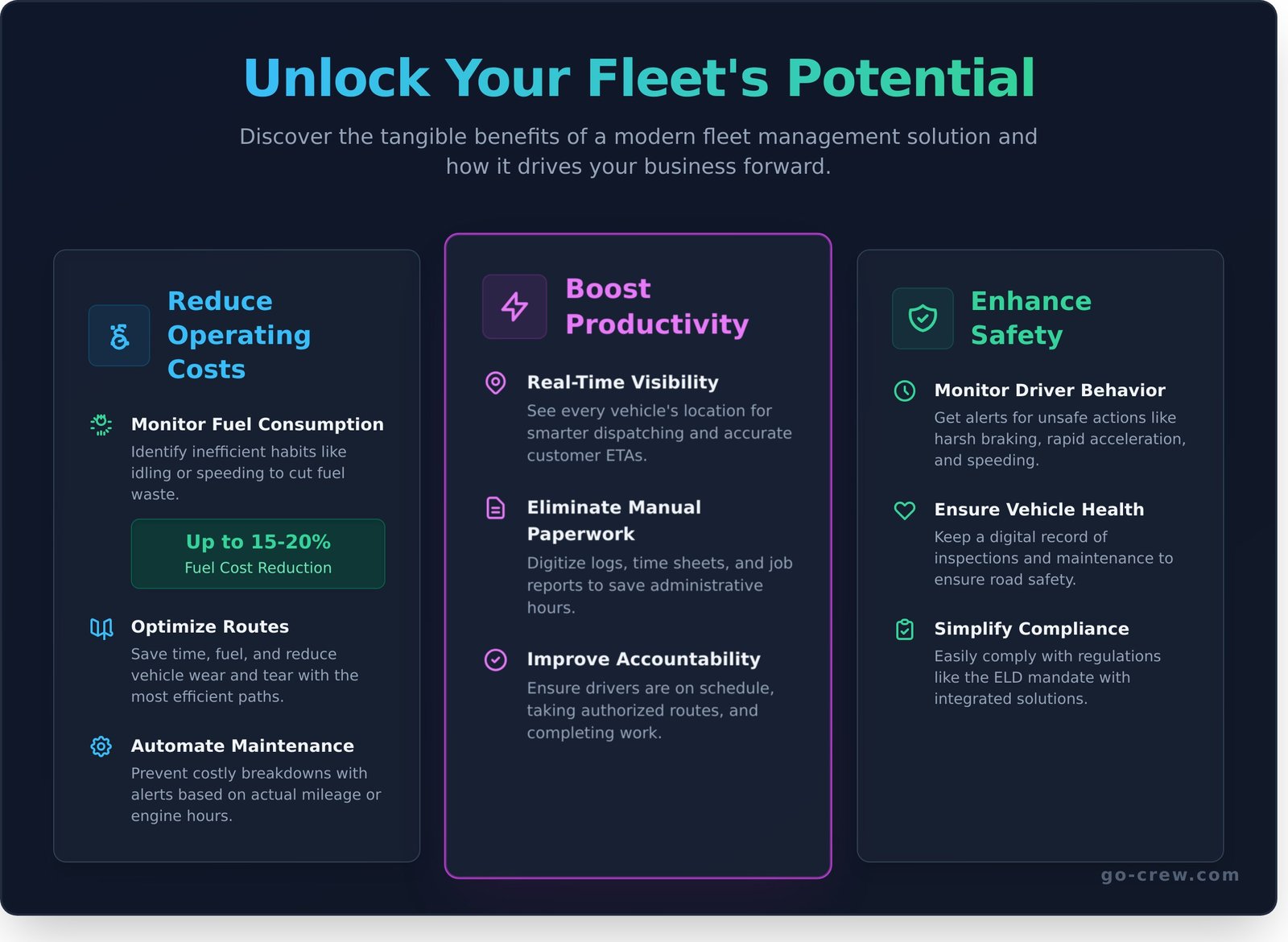
Modern fleet management solutions deliver tangible results that directly impact your bottom line. Let’s break down the three core benefits.
Key Benefit 1: Drastically Reduce Operating Costs
Controlling expenses is critical for any small business. A fleet system gives you the data to make smarter financial decisions. You can pinpoint exactly where money is being wasted and take immediate action.
- Monitor Fuel Consumption: Identify and correct inefficient driving habits like excessive idling or speeding. Effective systems can reduce fuel costs by up to 15-20%.
- Optimize Routes: Ensure drivers take the fastest, most fuel-efficient routes to every job, saving time, fuel, and reducing vehicle wear and tear.
- Automate Maintenance: Get alerts for scheduled maintenance based on actual mileage or engine hours, preventing costly, unexpected breakdowns.
Key Benefit 2: Boost Productivity and Efficiency
More jobs completed in a day means more revenue. Fleet management software eliminates guesswork and automates tedious manual tasks, freeing up your team to focus on what they do best.
- Real-Time Visibility: See where every vehicle is at any moment. This allows for smarter dispatching, letting you send the closest driver to an urgent job.
- Eliminate Manual Paperwork: Digitize everything from driver logs and time sheets to job reports and vehicle inspections, saving hours of administrative work.
- Improve Accountability: Ensure drivers are on schedule, taking authorized routes, and completing their work efficiently throughout the day.
Key Benefit 3: Enhance Safety and Compliance
Protecting your drivers, vehicles, and reputation is paramount. A fleet system acts as a digital co-pilot, promoting safer driving habits and simplifying complex regulatory requirements.
- Monitor Driver Behavior: Get instant alerts for unsafe actions like harsh braking, rapid acceleration, and speeding, allowing you to coach drivers effectively.
- Ensure Vehicle Health: Keep a digital record of inspections and maintenance to ensure every vehicle on the road is safe to operate.
- Simplify Compliance: For relevant industries, integrated solutions make it easy to comply with regulations like the ELD (Electronic Logging Device) mandate.
Core Components of a Modern Fleet Management System
Searching for fleet management solutions can feel overwhelming. Many platforms are marketed as “all-in-one,” but what does that really mean? Think of it less as a single, rigid product and more as a powerful toolkit. You don’t have to use every tool in the box. The key is to identify your biggest challenge-be it high fuel costs, inefficient routes, or safety concerns-and choose the components that solve it.
The technology driving modern fleet management systems is constantly evolving, but it’s all built on a few core pillars. Let’s break them down into simple, easy-to-understand parts.
GPS & Real-Time Vehicle Tracking
This is the foundation. At its core, fleet management is about knowing where your assets are and what they’re doing. This component provides a live, bird’s-eye view of your entire operation. Key features include:
- Live Map Views: See every vehicle’s position in real-time.
- Geofencing: Create virtual boundaries and get alerts when vehicles enter or exit.
- Location History: Review past routes to verify jobs or resolve disputes.
The result? Smarter dispatching, accurate ETAs for customers, and a powerful tool for theft recovery.
Local service providers, from plumbers to private hire taxis, rely on this to deliver prompt service. For example, a company like Speedy Cars 247 uses precise tracking to manage its fleet efficiently, ensuring drivers arrive on time for critical trips like airport transfers.
In the luxury transportation sector, for instance, providing precise ETAs is not just a convenience-it’s a core part of the service promise. To see how a premium service manages its fleet to ensure punctuality, you can discover LEEMO and their approach to bespoke transportation.
Vehicle Maintenance & Diagnostics
Stop reacting to breakdowns and start preventing them. This component connects directly to a vehicle’s On-Board Diagnostics (OBD-II) port to act as its health monitor. It automatically tracks service schedules for everything from oil changes to tire rotations and flags engine fault codes the moment they appear. This proactive approach helps you extend vehicle lifespan and avoid costly, unexpected downtime.
Driver Behavior & Safety Monitoring
Your drivers are your most valuable asset. This module uses telematics data to monitor habits that increase risk, such as speeding, harsh braking, and sharp cornering. When paired with dash cams, it provides clear, unbiased video evidence for coaching or incident review. It’s not about watching over your team’s shoulder; it’s about building a culture of safety that protects your drivers, your vehicles, and your business.
Fuel Management & Reporting
With fuel prices always in flux, every drop counts. This tool helps you gain control over one of your biggest operational costs. By integrating with fuel cards, it tracks every purchase and flags suspicious activity. It also monitors key metrics like miles per gallon (MPG) and excessive idle time, giving you the data needed to identify fuel-wasting habits and coach drivers toward more efficient and sustainable practices.
Types of Solutions: From Complex Hardware to Simple Apps
The term ‘fleet management’ covers a huge range of tools, and not all fleet management solutions are created equal. Picking the right one means matching the tech to your team’s actual needs-not paying for features you’ll never use. Let’s break down the main categories so you can find your perfect fit, fast.
Comprehensive Hardware-Based Systems
This is the traditional, heavy-duty approach. A technician professionally installs a telematics device or “black box” directly into each vehicle. These systems capture a massive amount of data, from engine diagnostics and fuel consumption to driver behavior and hours-of-service compliance.
- Cost & Complexity: High. Requires hardware purchase, professional installation, and a significant monthly subscription.
- Best For: Large-scale operations like long-haul trucking, construction, or any business with strict compliance and vehicle maintenance requirements.
Software-Only Platforms
Think of these as the central command center for your assets. This type of platform is flexible, designed to integrate with various data sources-including different types of hardware, fuel cards, or accounting software. The focus is less on live tracking and more on asset lifecycle management, maintenance scheduling, and in-depth analytics.
- Cost & Complexity: Moderate. The software subscription is the main cost, but integration can be complex.
- Best For: Medium-sized businesses that already have some tracking hardware or need a powerful hub to manage vehicle maintenance and operational costs.
For businesses with highly specific integration needs or unique workflows that off-the-shelf platforms can’t handle, working with a custom software developer like API Pilot can provide a perfectly tailored solution.
App-Based Solutions (The ‘Bring Your Own Device’ Model)
The simplest and fastest way to get started. These modern tools use the GPS and data connection on your team’s existing smartphones. There’s no hardware to install and no waiting for technicians. Drivers download an app, join a group, and their location is shared in real-time. It’s all about speed, simplicity, and the core functionality you actually need.
- Cost & Complexity: Low. Often a simple, affordable subscription per user with zero hardware or installation costs. Get started in minutes.
- Best For: Small businesses, local service providers (like plumbers or landscapers), and any team that needs immediate, no-fuss visibility of where everyone is right now.
How to Choose the Right Fleet Solution for Your Business
With dozens of fleet management solutions on the market, finding the perfect fit can feel overwhelming. The secret? Stop focusing on endless feature lists. The best system isn’t the one with the most bells and whistles-it’s the one that solves your specific problems efficiently and affordably. Before you look at a single provider, use this simple three-step framework to define exactly what you need.
Step 1: Assess Your Fleet Size and Primary Goal
Start with your reality. Are you coordinating five local delivery vans or managing 50 long-haul trucks? The scale of your operation dictates the complexity you need. More importantly, identify the #1 problem you’re trying to solve. Is it skyrocketing fuel costs, poor driver accountability, or simply not knowing where your team is? This clarity is crucial. Prioritize what matters most.
- Must-Haves: Core features that solve your main problem (e.g., real-time location tracking on a map).
- Nice-to-Haves: Useful, but not essential, features (e.g., advanced fuel consumption reports).
Step 2: Compare Hardware vs. App-Based Simplicity
Do you truly need complex vehicle diagnostics that require a device wired into your vehicle’s OBD-II port? These hardware systems are powerful but come with installation costs and potential vehicle downtime. For many small businesses, a simple, app-based solution is faster and more effective. If your primary need is live location sharing and team coordination, solutions like Go-Crew use the smartphones your team already carries, eliminating hardware entirely.
Step 3: Evaluate Total Cost of Ownership (TCO)
Look beyond the advertised monthly subscription fee. The true cost of many fleet management solutions is hidden in the details. Ask potential providers about upfront hardware costs, professional installation fees, and contract lengths. A complex system with a high TCO might not deliver a return on investment for years. In contrast, app-based options often have a low or zero TCO, with simple monthly pricing and no long-term commitments, making them a smarter choice for agile businesses.
The Go Crew Advantage: Simple, Real-Time Tracking for Any Team
After exploring the world of fleet management, you might feel that most systems are overly complex and expensive for your small business. What if you just need to know where your team is, right now, without the enterprise-level price tag and steep learning curve? That’s precisely why we built Go Crew. It’s the smart, simple alternative for businesses that value speed and immediate results over complicated features.
Go Crew cuts through the noise of traditional fleet management solutions to deliver the one thing that matters most: real-time visibility of your entire crew on a single, easy-to-read map. No more “where are you?” phone calls, just instant answers.
No Hardware, No Hassle
Forget about expensive black boxes, complicated wiring, and scheduling vehicle downtime that costs you money. Go Crew works on the device your team already carries and uses every day: their smartphone. This modern, app-based approach means you get powerful tracking with unmatched simplicity.
- Zero hardware or installation costs: Simply download the app and invite your team.
- No vehicle downtime: Your fleet stays on the road, earning for your business.
- Ultimate flexibility: It’s the perfect solution for businesses that work with independent contractors, have employees using personal vehicles, or manage a mixed-use fleet.
Everything You Need, Nothing You Don’t
Many platforms overwhelm you with confusing dashboards, endless reports, and features you’ll never touch-but still have to pay for. We believe in focused power. Go Crew provides live, accurate group location sharing, giving you instant access to critical information like current speed, direction of travel, and location history. It’s the perfect tool for improving coordination, verifying service calls, and enhancing safety without the clutter.
Built for Speed and Efficiency
Your time is your most valuable asset. That’s why we designed Go Crew to be the fastest way to get your team on the map. You can have your entire crew set up and tracking in under five minutes-no training manuals or long support calls required. The intuitive interface is so simple, your team will be using it like pros from day one. For businesses that need results now, Go Crew redefines what effective fleet management solutions should be: fast, easy, and real-time.
See how easy fleet tracking can be. Try Go Crew today!
Simplify Your Fleet and Drive Growth
Optimizing your fleet is a powerful step, but it’s just one part of a larger strategy for success. Ensuring your operational improvements support your long-term vision requires a solid business plan. For those looking to formalize their strategy, AI-powered tools like GrowthGrid can help generate comprehensive documents that guide your company’s future.
Choosing the right tools for your team doesn’t have to be complicated. As we’ve covered, modern fleet management is all about boosting efficiency, cutting costs, and gaining real-time visibility. The most important takeaway is that today’s best fleet management solutions are accessible, powerful, and don’t require complex hardware or steep learning curves. It’s about finding the right fit for your operational needs.
And once your operations are optimized, driving growth also means ensuring you have a steady stream of new customers. To learn how to build a powerful online presence that attracts local clients, visit Local Biz Growth for expert digital marketing strategies.
This is where Go Crew delivers. We skipped the clunky hardware and built a system that runs on the smartphones your team already uses. It’s easy, fast, and gives you the real-time tracking you need to stay coordinated. Trusted by high-performance teams in motorsports, logistics, and local services, Go Crew is built for action and designed for simplicity.
Ready for simple, real-time fleet tracking? Download Go Crew and get started for free!
Frequently Asked Questions About Fleet Management
What is the difference between fleet management and telematics?
Think of telematics as the technology that collects raw data from your vehicles-like GPS location, speed, and engine status. Fleet management is the strategy of using that data. It’s the software and system that turns those raw numbers into smart business decisions, such as optimizing routes, scheduling maintenance, and improving driver safety. Telematics provides the “what,” while fleet management provides the “so what” for your business operations.
How much do fleet management solutions typically cost?
Costs for fleet management solutions are typically billed on a per-vehicle, per-month basis. Basic plans focused on simple GPS tracking often start around $15-$25 per vehicle. More advanced systems that include features like engine diagnostics, driver behavior monitoring, and integrated dashcams can range from $30 to $50 or more. The right plan depends on matching the features to your specific business needs and budget.
Can I track my vehicles without installing a hardware GPS device?
Yes, absolutely. Many modern systems offer a mobile app-based solution that turns a driver’s smartphone into a GPS tracking device. This is a fast and easy way to get started without the time or cost of hardware installation. The main trade-offs are a reliance on the driver’s phone being charged and the app running correctly. For guaranteed data, like engine diagnostics, a dedicated hardware device remains the most reliable option.
Is it legal to track company vehicles and employees?
In most places, yes. It is generally legal to track company-owned vehicles as they are business assets. However, transparency with your team is essential. You should have a clear, written policy that all employees are aware of and have signed. Laws can vary by state or region, especially concerning tracking during non-work hours. It’s always best to consult a legal professional to ensure your policy is fully compliant.
How can a fleet management app help my small delivery or service business?
A fleet management app acts as a real-time command center for your operations. You can see exactly where your drivers are to give customers accurate ETAs and optimize routes on the fly to save fuel. It also boosts accountability and allows for digital proof of delivery or service completion. It’s all about working smarter to get more jobs done efficiently, reduce costs, and keep your customers happy.
What kind of ROI can I expect from a fleet management solution?
The return on investment is often fast and significant. Most businesses see a 10-20% reduction in fuel costs from better routing and less idling time. Proactive maintenance alerts cut down on costly, unexpected repairs and vehicle downtime. By dispatching more efficiently, your team can handle more jobs each day. Many small businesses find the system pays for itself within just a few months through these direct savings and productivity gains.
