
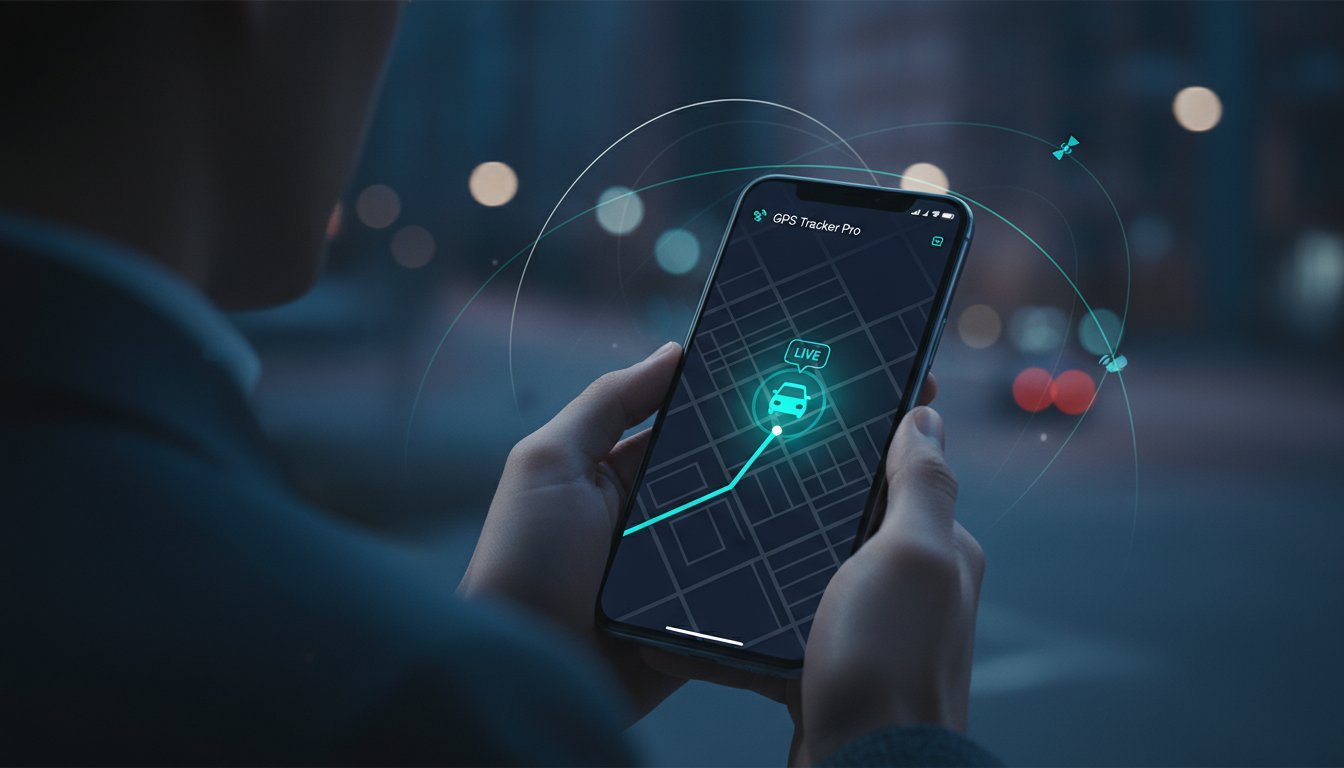

That momentary panic when you can’t find your car. The constant low-level worry about your newly licensed teen out on the road. The chaos of trying to coordinate a convoy for a road trip. If this sounds familiar, you know that peace of mind is priceless. A modern vehicle gps tracker is the simple, real-time solution to ditch that stress for good, putting your car’s location right in the palm of your hand.
But the world of tracking can seem complicated and expensive. Hardwired devices, monthly subscription fees, complex setups-it’s a lot to navigate. Forget the confusion. We’re cutting straight to the point. This guide will show you exactly how GPS trackers work, explore the different types available, and help you decide if a dedicated hardware device or a simple, user-friendly app is the right choice for your needs. It’s time to find an easy, low-cost way to keep your car and your loved ones safe.
How Do Vehicle GPS Trackers Actually Work? The Simple Breakdown
Ever wondered how a tiny box can tell you exactly where your car is, anywhere on the globe? It’s not magic-it’s a powerful and reliable system. At its core, GPS stands for Global Positioning System, a satellite-based network originally developed for military use that is now essential to our daily lives. A vehicle gps tracker taps into this network to provide a simple, powerful function: pinpointing its exact location in real-time.
To see this tech in action, check out this quick breakdown:
The entire process boils down to a seamless conversation between hardware in space, your vehicle, and the device in your hand. It’s a three-part system designed for speed and simplicity.
The Core Technology: Satellites, Receivers, and Transmitters
A vehicle GPS tracker couldn’t work without three key players operating in perfect sync. Think of it as a team effort between the sky, your car, and the cloud.
- GPS Satellites: A network of over 30 satellites orbits the Earth, constantly broadcasting precise time and location signals down to the surface.
- The Tracker (Receiver): The small device installed in your vehicle, known as a GPS tracking unit, is a sophisticated receiver. Its job is to listen for signals from multiple satellites simultaneously.
- Cellular/Satellite Transmitter: Once the tracker calculates its location, it needs to report back. It uses a built-in transmitter to send this data over a cellular network (like a smartphone) to a central server.
From the Car to Your Phone: The Data’s Journey
The journey from a satellite signal to a moving dot on your map is incredibly fast. Here’s the simple, three-step play-by-play:
- Position Calculation: The tracker locks onto signals from at least four GPS satellites. By measuring the time it takes for each signal to arrive, it uses a process called trilateration to calculate its precise latitude, longitude, and altitude.
- Data Transmission: It then packages this location data and sends it out using its cellular modem. It’s just like your phone sending a text message, but with coordinates instead of words.
- Display on Your App: The data hits a secure server, which instantly processes it and plots the location on an easy-to-read map inside your smartphone app or web dashboard. All in a matter of seconds.
Finally, trackers come in two main flavors. Active trackers send location updates in real-time, which is essential for live monitoring and anti-theft. In contrast, passive trackers (or data loggers) store route history on the device itself, requiring you to retrieve it to see the data. For immediate security and peace of mind, an active tracker is the clear winner.
Hardware vs. App-Based: The Two Main Types of Vehicle Trackers
When you decide you need a vehicle gps tracker, your first choice is simple: do you want a dedicated hardware device installed in your car, or a flexible app on your smartphone? There’s no single “best” answer-it all depends on your goal. The easiest way to decide is to ask yourself what you’re actually tracking.
A hardware tracker is for the asset itself-the car, truck, or motorcycle. An app-based tracker is for the person in the asset. This fundamental difference shapes everything from cost and installation to the most effective use cases for each.
Dedicated Hardware Trackers: For Permanent Vehicle Monitoring
If your primary goal is anti-theft protection, monitoring a fleet, or keeping tabs on a vehicle’s location regardless of who is driving, a dedicated hardware device is the way to go. These units are physically connected to the vehicle, offering reliable, always-on tracking. Before installing a permanent device, it’s wise to understand the various state laws on GPS tracking to ensure your usage is fully compliant. Common types include:
- OBD-II Port Trackers: The ultimate in simplicity. These plug directly into your vehicle’s diagnostic port in seconds. No wires, no fuss.
- Hardwired Trackers: For discreet tracking, these are wired directly to the car’s battery. They are often hidden from view and never need to be recharged.
- Battery-Powered Trackers: These magnetic, portable units can be placed anywhere on a vehicle. They offer great flexibility but require periodic recharging.
Smartphone App Trackers: For Simplicity and Group Coordination
For temporary tracking, coordinating with friends, or sharing your location during a group drive, smartphone apps are unbeatable. Instead of requiring new hardware, they leverage your phone’s built-in GPS and data connection. This makes them perfect for real-time group activities like convoys, bike rides, or meeting up at an event. The focus is on sharing your journey with others, not on permanent asset security.
- Pros: No extra hardware to buy, setup is instant, and many apps are free or low-cost. It’s the definition of fast and easy.
- Cons: Tracking only works if the person has their phone, it’s charged, and the app is running. If the phone gets left behind, the vehicle’s location is unknown.
Top 5 Reasons You Might Need a Vehicle Tracker
A modern vehicle gps tracker is more than just a moving dot on a map-it’s a powerful tool for security, safety, and coordination. These devices leverage the highly accurate, U.S.-owned Global Positioning System (GPS) to provide real-time location data, unlocking a range of practical benefits for everyday life. Here are the top reasons you might need one.
1. Theft Recovery and Asset Protection
The ultimate peace of mind comes from knowing your vehicle is secure. A dedicated hardware tracker offers a powerful defense against theft, giving you the upper hand.
- Instant Alerts: Get a notification on your phone the moment your car moves without your permission or leaves a designated area (geofence).
- Fast Recovery: Provide law enforcement with the vehicle’s exact, real-time location to dramatically increase the chances of a quick recovery.
- Post-Recovery Repairs: Even with a quick recovery, a stolen vehicle can come back with damage. Knowing where to source high-quality aftermarket parts can make the repair process smoother; for a wide selection, you can check out Aggwings.
Best suited for: Hardwired or plug-and-play OBD-II hardware trackers.
2. Monitoring Teen or Elderly Drivers
For parents of new drivers or caregivers of elderly relatives, a tracker provides a vital safety net. It’s not about spying-it’s about ensuring their well-being on the road.
- Promote Safe Habits: Set up instant alerts for speeding or harsh braking to encourage responsible driving.
- Set Safe Zones: Use geofencing to create approved areas, like a route to school or work, and get notified if the vehicle travels outside them.
Can be achieved with: Dedicated hardware or a trusted, permission-based app solution.
3. Simple Fleet Management for Small Businesses
You don’t need a complex enterprise system to manage a few company vehicles. A simple location tracking solution can streamline your operations instantly.
- Boost Efficiency: Know where your drivers are to optimize routes, dispatch the closest vehicle, and provide accurate ETAs to clients.
- Improve Accountability: Verify work hours, track mileage for expenses, and ensure company vehicles are used appropriately.
Ideal use case for: Simple, app-based trackers that offer easy setup and group visibility.
4. Coordinating Group Travel and Events
Ever tried to keep a convoy of cars together on a road trip? Group location sharing eliminates the chaos and keeps everyone connected, saving time and frustration.
- Stay Connected: See everyone in your group on a single map in real-time. No more “where are you?” texts or getting separated.
- Perfect for Hobbies: Essential for motorsports, cycling groups, off-roading adventures, or any event where your crew is on the move.
This is where app-based group sharing truly shines, offering temporary, event-based tracking.
5. Finding Your Parked Car
It’s a simple but common problem: forgetting where you parked in a massive lot or an unfamiliar city. A vehicle gps tracker solves this in seconds.
- Pinpoint Location: Just open the app and get a precise pin showing your car’s location.
- Save Time & Stress: Stop wandering aimlessly. Get directions straight to your vehicle and get on your way.
Best suited for: Any tracker, from a simple app on your phone to a dedicated hardware device.
Key Features to Look For When Choosing a Solution
Choosing the right vehicle gps tracker isn’t about getting the most features-it’s about getting the right features for your needs. Whether you’re a parent, a business owner, or a motorsport enthusiast, understanding the core functions will help you find a solution that saves you time and gives you peace of mind. Let’s break down what really matters.
Real-Time Tracking vs. Location History
Real-time tracking shows you exactly where your vehicle is, right now. This is essential for immediate needs, like coordinating a meetup with your crew or locating a stolen car. The key here is the update frequency-some trackers refresh every 30 seconds, while high-performance options update every 3-5 seconds for near-instantaneous accuracy.
Location history, on the other hand, records past routes. It’s perfect for reviewing a teen driver’s trip, verifying business mileage, or re-living an epic road trip with friends. You can see where the vehicle has been, when it stopped, and for how long.
Alerts and Notifications: Geofencing, Speed, and More
Smart alerts are what turn a simple tracker into a powerful safety and management tool. Look for these key notifications:
- Geofencing: Create virtual boundaries on a map (a “geofence”) around a home, school, or worksite. You’ll get an instant alert when the vehicle enters or leaves that zone. Simple and effective.
- Speed Alerts: Set a maximum speed limit and receive a notification the moment the vehicle exceeds it. It’s a must-have for parents of new drivers or fleet managers.
- SOS Buttons: Some dedicated hardware trackers include an SOS button that a driver can press in an emergency to send their exact location to a pre-selected contact.
Cost: Upfront Price vs. Monthly Subscription Fees
The cost of a vehicle gps tracker typically falls into two models. Hardware-based trackers usually involve buying the device and then paying a required monthly subscription for data and service. This can add up quickly, so always calculate the total cost over a full year.
In contrast, app-based solutions often use a freemium model. You can get started with core features for free and only pay if you need advanced functionality. This approach eliminates hidden fees and long-term commitments.
Looking for a tracker with no monthly fees? Try Go Crew for free.
Go Crew: A Simple, Hardware-Free Alternative for Group Tracking
While traditional GPS trackers offer powerful security and monitoring, not every situation requires a permanent, hardwired device. For coordinating groups in motion-from road trips to delivery teams-the focus shifts to real-time visibility and simplicity. This is where Go Crew shines. It’s a modern, app-based solution designed around two core principles: TIME-SAVING & SIMPLICITY. Forget hardware; your smartphone is all you need.
No Hardware, No Installation, No Hassle
The biggest barrier to using a conventional vehicle gps tracker is often the installation. Go Crew eliminates this completely. It’s not a physical device you plug in or wire to your battery. It’s a user-friendly app you download, and you can be up and running in under a minute.
- Instant Setup: Just download the app and create an account. No waiting for shipping or scheduling an installer.
- No Extra Devices: Your smartphone is the tracker. There’s nothing extra to buy, install, or keep charged.
- Universal Compatibility: Avoids all the complexities of OBD-II ports, wiring diagrams, or vehicle compatibility issues.
Perfect for Group Drives, Events, and Small Teams
Go Crew is built specifically to solve the “where is everyone?” problem. Instead of a stream of texts and phone calls, you get a clear, live view of your entire group on a single map. Simply create a ‘Crew,’ invite members, and everyone’s location is visible in real-time. You control exactly when your location is shared and with whom. It’s the ideal tool for:
- Motorsports events and track days
- Group road trips and motorcycle rides
- Cycling clubs and charity events
- Small business delivery and field service teams
Freemium Model: Powerful Tracking That’s Free to Start
Professional tracking solutions often come with the double cost of hardware and a mandatory monthly subscription. Go Crew offers a more flexible approach. The core group tracking features are completely free to use, giving you powerful real-time visibility without any upfront investment. This makes it an incredibly affordable alternative for anyone who needs a temporary or event-based vehicle gps tracker solution. Premium plans are available if you need advanced features, but you only upgrade when you’re ready.
For dynamic group coordination, Go Crew is the smarter, faster solution that puts powerful, real-time location sharing right in your pocket. Ready to simplify your group movements? Discover how Go Crew can save you time and hassle today.
Beyond Hardware: Your Smart Tracking Solution Awaits
As we’ve seen, GPS tracking technology provides powerful benefits, from securing your assets to coordinating group activities. While a traditional vehicle gps tracker is a solid option for permanent security, many modern situations call for more flexibility and ease of use. The choice is no longer just about hardware-it’s about finding the smartest solution for your specific needs.
This is where Go Crew changes the game. Forget complex installations and bulky devices. Built for TIME-SAVING & SIMPLICITY, Go Crew offers a hardware-free alternative trusted by dynamic groups in motorsports, tuning, and cycling. It’s instant, real-time group tracking right from your phone.
Group location sharing couldn’t be easier. Ready for simple, real-time tracking? Download Go Crew for free!
Get your crew on the map and on your way in minutes.
Frequently Asked Questions
Is it legal to use a GPS tracker on a car?
Yes, but it depends on ownership. It is completely legal to use a GPS tracker on a vehicle you own or co-own. You can also legally track a car driven by your minor child. However, placing a tracker on a vehicle you do not own without the driver’s consent is illegal in most places. Always check your local and state laws to ensure you are in full compliance before installing any device.
Do vehicle GPS trackers drain the car’s battery?
Not in any significant way. Modern hardwired vehicle GPS trackers are designed for efficiency, drawing a minimal amount of power-often less than the car’s own internal clock. Most high-quality units feature a “sleep mode” that activates when the vehicle is parked, further reducing energy consumption. A healthy car battery can support a tracker for weeks or even months without issue, so battery drain is not a concern.
Can a GPS tracker work without a cell signal?
It’s a two-part process. A tracker uses GPS satellites to determine its location, which works anywhere on Earth, even without cell service. However, to send that location to your phone in real-time, it needs a cellular (GSM) signal. Many trackers solve this with a “store and forward” feature. They log location points when out of cell range and upload the data as soon as they reconnect to a network.
What’s the difference between a GPS tracker and an Apple AirTag for a car?
The core technology is the main difference. A dedicated GPS tracker uses its own satellite connection for precise, real-time location data. An AirTag does not have GPS; it relies on the Bluetooth signals of nearby Apple devices in the “Find My” network to report its position. This makes GPS trackers far more reliable for active vehicle tracking, especially in remote areas where other Apple users are scarce.
How accurate are vehicle GPS trackers?
Extremely accurate. Most modern GPS trackers can pinpoint your vehicle’s location within 5 to 10 meters (about 16 to 32 feet). This level of precision is ideal for everything from theft recovery and fleet management to simply finding your car in a massive parking lot. The accuracy is consistent, providing you with reliable, real-time data whenever you need it. The quality of the device and clear sky view can enhance this precision.
Do I need to pay a monthly fee for all GPS trackers?
Not all, but most real-time trackers require one. The monthly subscription fee covers the cost of the cellular data plan for the SIM card inside the tracker. This is what allows the device to transmit its location over a network to your app. Some devices, known as GPS loggers, record location data internally to be downloaded later via USB or Bluetooth. These typically do not have any monthly fees.
